Smart Appliances for Home: A Complete Guide to Building a Connected Home
Anything that gives you time back in your day is a worthwhile investment. Modern smart appliances for home environments bring high-tech convenience directly into your everyday routine. In most cases, managing a connected device is as simple as opening an app on your phone, using voice commands, or letting automated sensors do the work for you.
If you have ever wondered what smart appliances do, the answer comes down to three core benefits: automation, remote management, and energy efficiency. Rather than running continuously or relying on manual adjustments, connected home appliances learn your habits, optimize power consumption, and handle repetitive chores independently.
Knowing where to start can feel overwhelming with so many options on the market. Here is a curated smart appliances list highlighting five high-impact smart household appliances that deliver immediate comfort, safety, and utility.
1. Self-Cleaning Toilet and Bidet Combinations
Bathroom cleaning remains one of the least popular household chores. Modern fixture manufacturers have solved this problem by engineering self-cleaning toilets paired with advanced bidet technology. Instead of requiring frequent scrubbing with harsh chemical cleansers, these fixtures maintain hygiene automatically after every use.
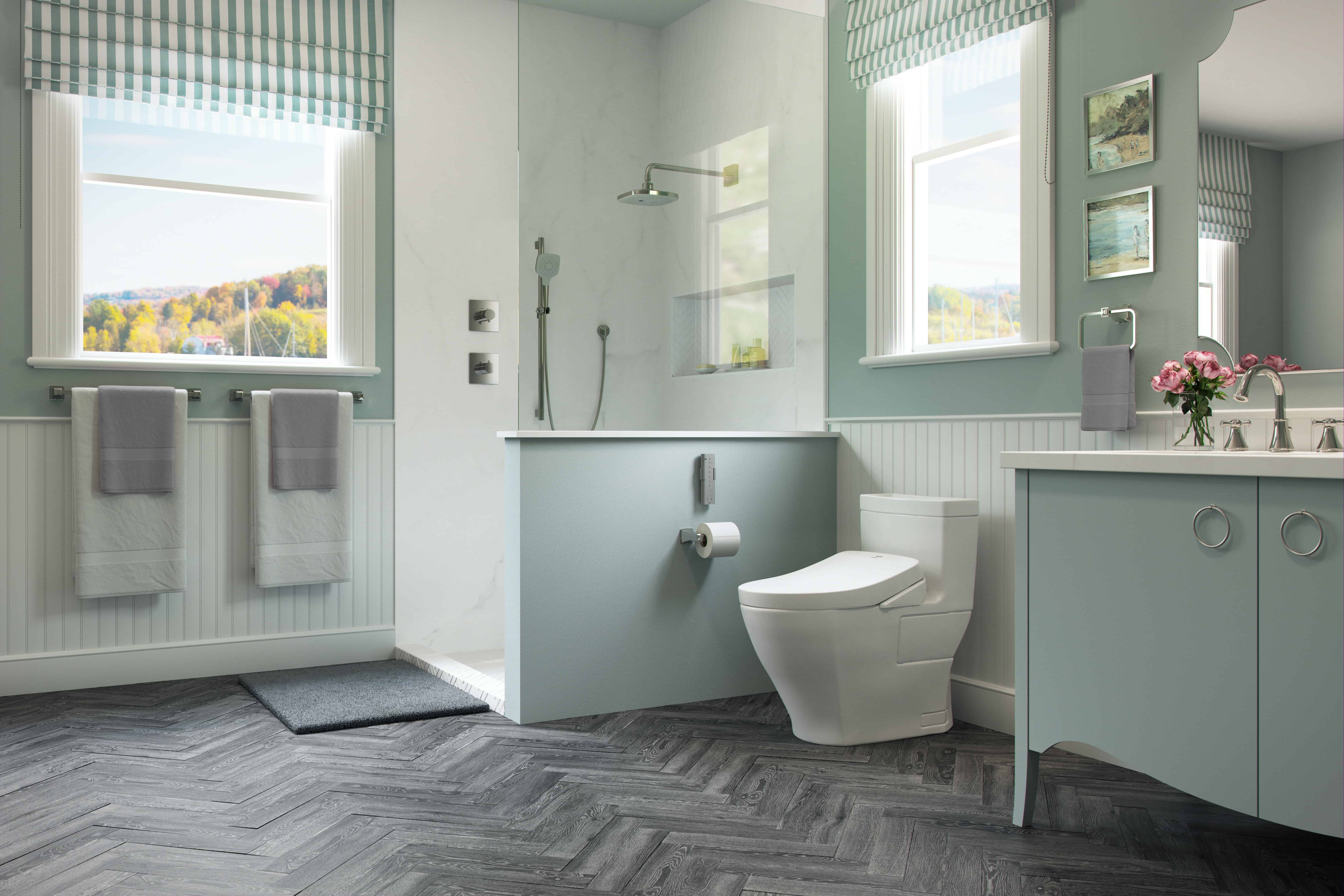
A prime example is the TOTO Drake Washlet+ C5 system, which combines several self-sanitizing technologies:
- Self-Sanitizing Glaze and Pre-Mist: The ceramic bowl features a micro-smooth ion-barrier glaze (CEFIONTECT) that prevents waste from adhering to the surface. Before each use, the bowl receives a light mist of water. After flushing, it sprays EWATER+ (electrolyzed water with natural antibacterial properties) across both the bowl and the bidet wand to sanitize without chemical additives.
- Dual-Cyclone Flushing: Dual-nozzle flushing systems direct water through a centrifugal action, cleaning the entire bowl surface using less water per flush.
- Remote-Controlled Personal Hygiene: An intuitive wireless remote allows you to adjust water temperature, spray position, water pressure, and warm-air drying settings. Integrated deodorizers continuously filter air through carbon cartridges to eliminate odors at the source.
- Climate Comfort: Temperature-controlled heated seats eliminate the discomfort of cold fixtures during winter months, featuring adjustable heat levels and automated power-saving modes.
2. Smart Thermostats and Climate Controllers
A standard thermostat operates on a fixed schedule, whereas a true smart thermostat responds dynamically to your life. While standard Wi-Fi thermostats allow you to change temperatures from a smartphone app, true smart appliances for home climate management use machine learning and environmental sensors to optimize heating and cooling automatically.
How Smart Climate Management Saves Energy
Smart thermostats gradually adjust temperatures in advance of your routine, preventing heavy energy spikes from sudden HVAC engagement. Integrated motion and proximity sensors track room occupancy throughout the day. If you leave early or stay home on a weekend, the system adapts instantly without manual programming.
For homeowners seeking the best smart appliance for all-electric home efficiency, pairing a smart thermostat with heat pump systems provides significant operational savings. Heat pumps operate best with gradual temperature adjustments rather than drastic thermal shifts. Smart algorithms manage these cycles smoothly, yielding average savings of 10% to 12% on heating and up to 15% on cooling utility bills.
Furthermore, these devices monitor system health, tracking air filter lifespan, airflow restrictions, and unusual equipment performance before minor issues turn into costly repairs.
3. Integrated Home Security and Environmental Systems
Video doorbells are widely recognized smart appliance examples, allowing homeowners to monitor package deliveries and speak with visitors remotely. However, a complete security setup expands beyond the front entrance to protect the interior structure of your property.
Comprehensive Home Protection
Modern security ecosystems connect wireless sensor networks to monitor physical security and environmental threats simultaneously:
- Environmental Hazard Detection: Connected smoke detectors, carbon monoxide sensors, and automated water leak shut-off valves notify your phone instantly during emergencies. Early leak detection can stop a burst pipe before major water damage occurs.
- Occupancy and Access Monitoring: Smart locks and indoor motion sensors allow you to grant temporary digital keys to service professionals, dog walkers, or contractors while tracking entry times automatically.
- Automated Device Coordination: Knowing how to automate home appliances begins with linking sensors to lighting and climate systems. For example, triggering an emergency smoke alarm can automatically signal smart light switches to illuminate exit pathways and command your thermostat to turn off HVAC blowers to restrict smoke movement.
4. Smart Refrigerators as Home Command Centers
Refrigerators run 24 hours a day, making them ideal candidates for smart technology upgrades. Modern smart kitchen appliances do far more than preserve food; they act as centralized management hubs for family schedules, meal prep, and kitchen inventory.
Instead of just keeping food cold, these units offer features that transform how your kitchen operates every day:
- Internal Cameras & Inventory Tracking: Built-in cameras let you view the contents of your fridge remotely through a phone app, helping you check what you need while at the grocery store. Integrated software also tracks expiration dates to reduce food waste.
- Dynamic Energy Management: Smart compressors automatically adjust cooling output based on food volume and daily usage patterns, cutting down on unnecessary power consumption.
- Meal Planning & Recipe Integration: Large touchscreen displays on the fridge door provide step-by-step cooking guides, video tutorials, and instant access to digital recipe collections.
- Centralized Family Organization: Display panels double as shared digital command centers where you can sync family calendars, leave digital notes, update grocery lists, and manage household schedules.
As anchor smart appliances for kitchen spaces, these refrigerators monitor internal airflow, notify you if a door remains ajar, and remind you when water filters need replacement. By keeping your grocery lists accurate and your food fresh longer, they eliminate duplicate purchases and streamline your entire kitchen routine.
5. Dual-Cleaning Smart Ovens
Self-cleaning ovens have evolved beyond standard high-heat cycles. Today’s smart wall ovens and ranges integrate flexible cleaning methods alongside precision cooking tools, making them essential smart kitchen gadgets for active households.
Advanced Cleaning Mechanics
- Pyrolytic Thermal Cleaning: Uses high temperatures to incinerate baked-on grease and food residue into fine ash. Once the cycle finishes and the automated door lock releases, the interior simply requires a quick wipe with a damp cloth.
- Steam Maintenance Cleaning: Uses a low-temperature steam cycle lasting approximately 30 minutes to soften light splatters immediately after cooking. This process operates quickly, uses minimal energy, and allows oven racks to stay in place.
Precision Cooking Technology
In addition to self-maintenance, smart ovens feature internal temperature probes, convection fans, and integrated video cameras that let you observe baking progress on your smartphone without opening the oven door and losing heat. Wi-Fi integration allows you to preheat the oven on your commute home or send precise cooking parameters directly from digital recipe databases.
Upgrade Your Home at Coburn’s Showroom
Building a connected house works best when you can experience the products in person. Seeing how intuitive a smart control panel feels, testing the quiet operation of a self-cleaning fixture, or reviewing finish options helps ensure you select the right products for your space.
Visit your local Coburn’s Showroom to explore the latest connected household fixtures and appliances. Our showroom specialists can guide you through compatible models, answer technical questions, and help you design a connected home tailored to your daily routine.

