Machine Age Modernism: How to Master Industrial Interior Design in Your Home
How to Master Machine Age Industrial Style in Your Home
Modern industrial design continues to stand as one of the most enduring, visually striking movements in residential architecture. Among its variations, Machine Age modernism has taken center stage in contemporary homes. Rooted in the mechanical breakthroughs of the early 20th century, this design philosophy celebrates the unrefined utility of manufacturing while streamlining it for modern living.
Instead of hiding structural components behind decorative trim, industrial home design strips away distractions. It turns utility into art, celebrating raw strength, durability, and honest engineering.
Whether you want to execute a complete renovation or introduce subtle accents, integrating industrial home decor creates a space that feels grounded, historical, and sleek. The kitchen serves as the perfect starting point for this transformation because it is naturally focused on work, movement, and daily prep.
What Is Machine Age Modernism?
Machine Age modernism emerged during the expansion of the Industrial Revolution. As manufacturing reshaped global culture, architects and builders stopped concealing structural materials. Instead, they highlighted heavy-duty cast iron, structural steel, timber, and dense masonry.
In modern residential settings, this movement balances utilitarian grit with polished sophistication. Machine Age industrial design ideas honor functional components of the past, such as visible beams, rivets, and pipework, while integrating high-performance fixtures, smooth surfaces, and modern ergonomics.
Core Elements of Industrial Interior Design
Bringing this aesthetic into your living space requires balancing raw architectural textures with purposeful interior choices.
Architectural Masonry and Concrete
Authentic industrial spaces rely on structural history. Incorporating an exposed brick interior adds rich texture, warmth, and immediate character to a room. If original brickwork is unavailable, brick veneers, architectural stone, or poured concrete offer the same sense of permanence. These surfaces act as grounding elements in living rooms, entryways, or behind kitchen workspaces, providing a textured backdrop against sleek metal fixtures.
Structural Metals and Exposed Hardware
Metal is the definitive material of the industrial era. Industrial home design prominently features raw steel, iron, matte black finishes, and warm brushed brass. To capture an authentic workshop feel, embrace functional metal accents throughout your layout:
- Exposed plumbing pipe runs along walls or under floating vanities
- Wrought iron stair railings and structural brackets
- Open steel shelving suspended by industrial rods
- Visible iron rivets, mechanical gears, and heavy metal turnbuckles
Ready to bring these architectural details into your own renovation?
Compare hardware finishes, textured fixtures, and lighting options in person by visiting your nearest Coburn’s Kitchen & Bath Showroom. Our team can help you select materials that balance raw industrial charm with your home’s unique footprint.
Warm Wood and Natural Grain
To prevent an industrial interior design scheme from feeling cold or sterile, natural timber is essential. Reclaimed hardwood floors, exposed ceiling joists, and heavy oak cabinetry balance the cool tones of steel and concrete.
In kitchen spaces, butcher block countertops bring a rich workbench vibe to the room. Solid wood work surfaces develop a soft patina over time, echoing vintage industrial prep stations while adding natural warmth.
Focused Task and Ambient Lighting
In historical factories and machine shops, clear illumination was a practical necessity. Modern spaces achieve this visual style using strategic industrial lighting fixtures. Look for pendant lights featuring bare Edison bulbs, metal cage guards, oversized factory dome shades, or exposed cord drops. Layering overhead task lights with low-level floor lamps creates dynamic contrast, highlighting textured walls and metal details across the room.
Applying Machine Age Style to an Industrial Kitchen
Because the kitchen is the central engine of the home, it naturally lends itself to an industrial kitchen design. Designing an industrial-style kitchen requires selecting materials that can endure heavy daily use while showcasing clean structural design.
A high-functioning workspace blends raw textural surfaces with heavy-duty plumbing fixtures that serve as visual anchor points.
Elevate Your Space with the DXV Etre Collection
When selecting fixtures for an industrial kitchen, the DXV Etre Collection stands out as a prime example of Machine Age design. DXV crafted this collection around three core principles: functionality, practicality, and structural purpose.
Precision Utility: The Industrial Kitchen Faucet
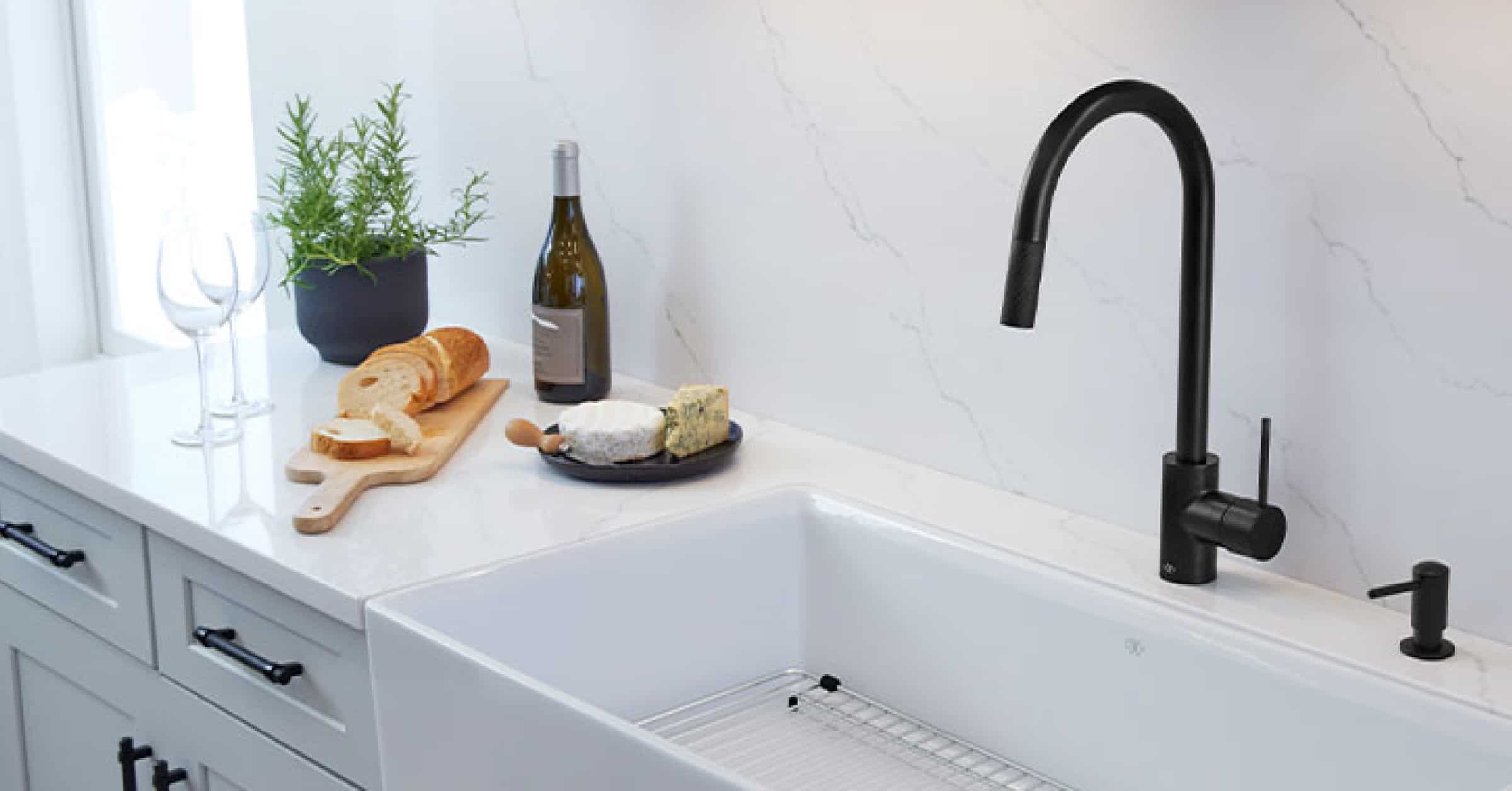
A central element of any high-performing prep station is an industrial kitchen faucet. The DXV Etre Pull-Down Kitchen Faucet presents minimalist, expertly crafted lines dedicated entirely to utility:
- Tactile Precision: The spray head and lever feature knurled detailing, an industrial texturing technique that provides an enhanced grip while echoing mechanical tool handles.
- Uncompromised Flexibility: A high-arc swivel spout rotates 360 degrees, housing a concealed pull-down spray head with a toggle switch for smooth transitions between stream and spray functions.
- Durable Construction: Built with ceramic disc valve cartridges for drip-free performance and stainless steel flex lines for long-term reliability.
- Tailored Finishes: Available in Matte Black, Polished Chrome, Ultra Steel, Satin Brass, and a striking dual-tone Matte Black with Satin Brass contrast to match your hardware palette.
- Versatile Installation & Extensions: Mount directly onto the sink deck or pair with a matching Etre escutcheon plate for added visual impact. Expand your setup with the matching Etre pull-down bar faucet for entertainment prep stations and a coordinated Etre soap dispenser to maintain seamless metallic contours.
Structural Durability: The Apron Front Kitchen Sink
Pairing high-output faucets with a robust sink creates an authentic prep station. An apron-front kitchen sink serves as a bold structural focal point in an industrial kitchen layout.
The DXV Etre Apron Front Sink is handcrafted from dense fine fireclay and coated in a triple-layer nonporous finish that resists scratching, chipping, and staining. Key structural features include:
- Generous Capacity: A deep 10-inch bowl basin comfortably accommodates commercial-grade cookware and large-scale meal prep.
- Smart Layout: Offset drain positioning maximizes internal workspace and optimizes under-sink storage space.
- Built-in Protection: Outfitted with stainless steel bottom grids that protect the fireclay surface while maintaining a clean, industrial line.
Transform Your Home at Coburn’s Showroom
Executing a balanced industrial interior design plan requires touching, comparing, and selecting materials in person. From tactile metal finishes to heavy-duty fireclay sinks and timber accents, seeing fixtures in a realistic setting makes all the difference.
Visit your local Coburn’s Kitchen & Bath Showroom to explore working displays and experience the DXV Etre Collection firsthand. Our experienced design consultants can help you select the ideal combination of plumbing fixtures, hardware, and finishes to bring Machine Age modernism into your home.
Frequently Asked Questions
What defines machine-age modern industrial design?
It highlights raw structural mechanics, functional metal hardware, and unrefined utility materials rather than concealing them behind decorative trim.
How can I make an industrial kitchen feel warm instead of cold?
Balance cool steel, concrete, and brick with natural wood elements like butcher block countertops, warm timber open shelving, or rich leather seating.
Are fireclay apron front sinks durable enough for an industrial kitchen design?
Yes. High-temperature firing and multi-layer glazing create a dense, non-porous surface that easily resists chipping, scratching, heat, and heavy daily wear.

