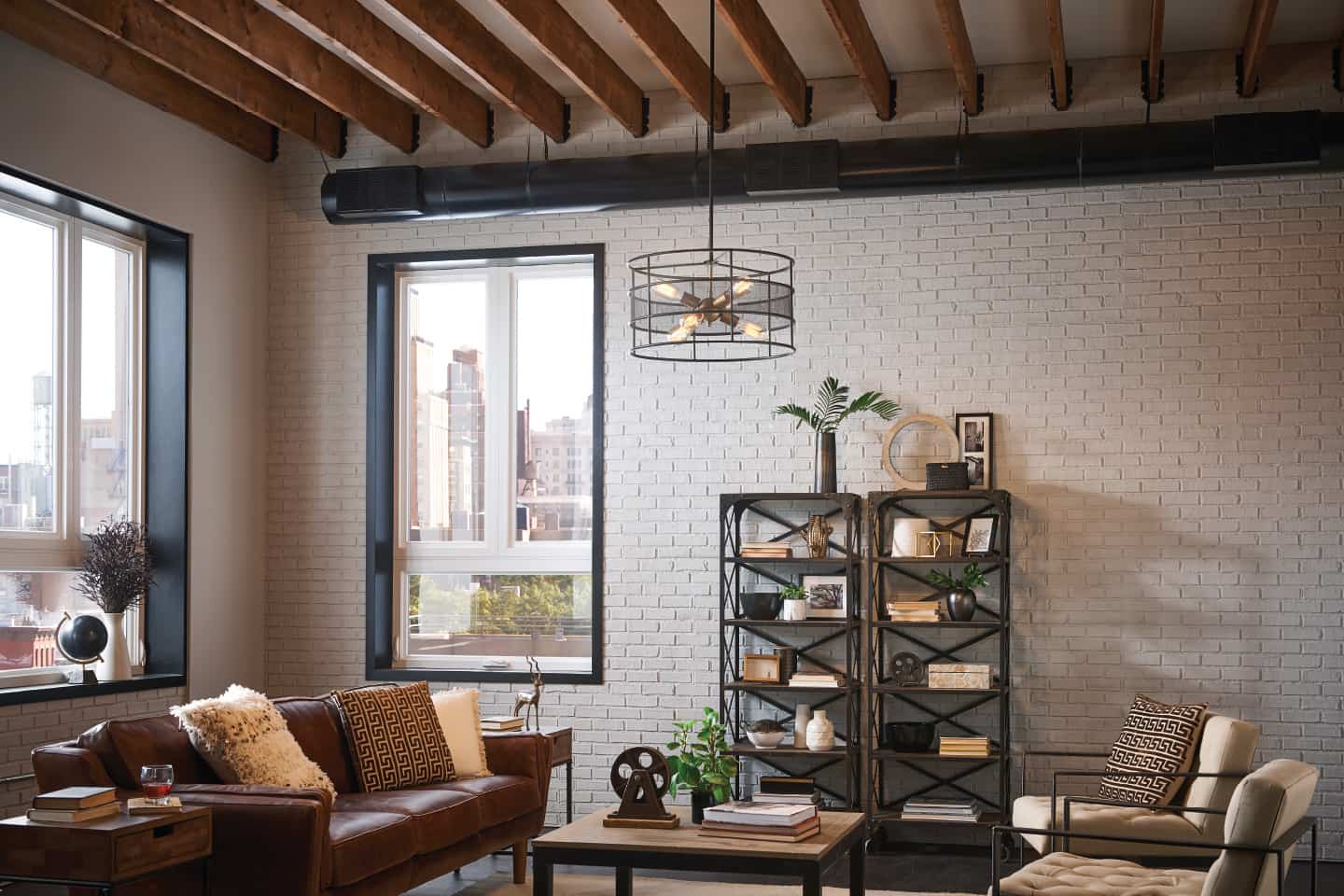
Transitional
A perfect marriage of traditional and contemporary design, the transitional style takes on a bold, sophisticated look while maintaining a classic feel.
Explore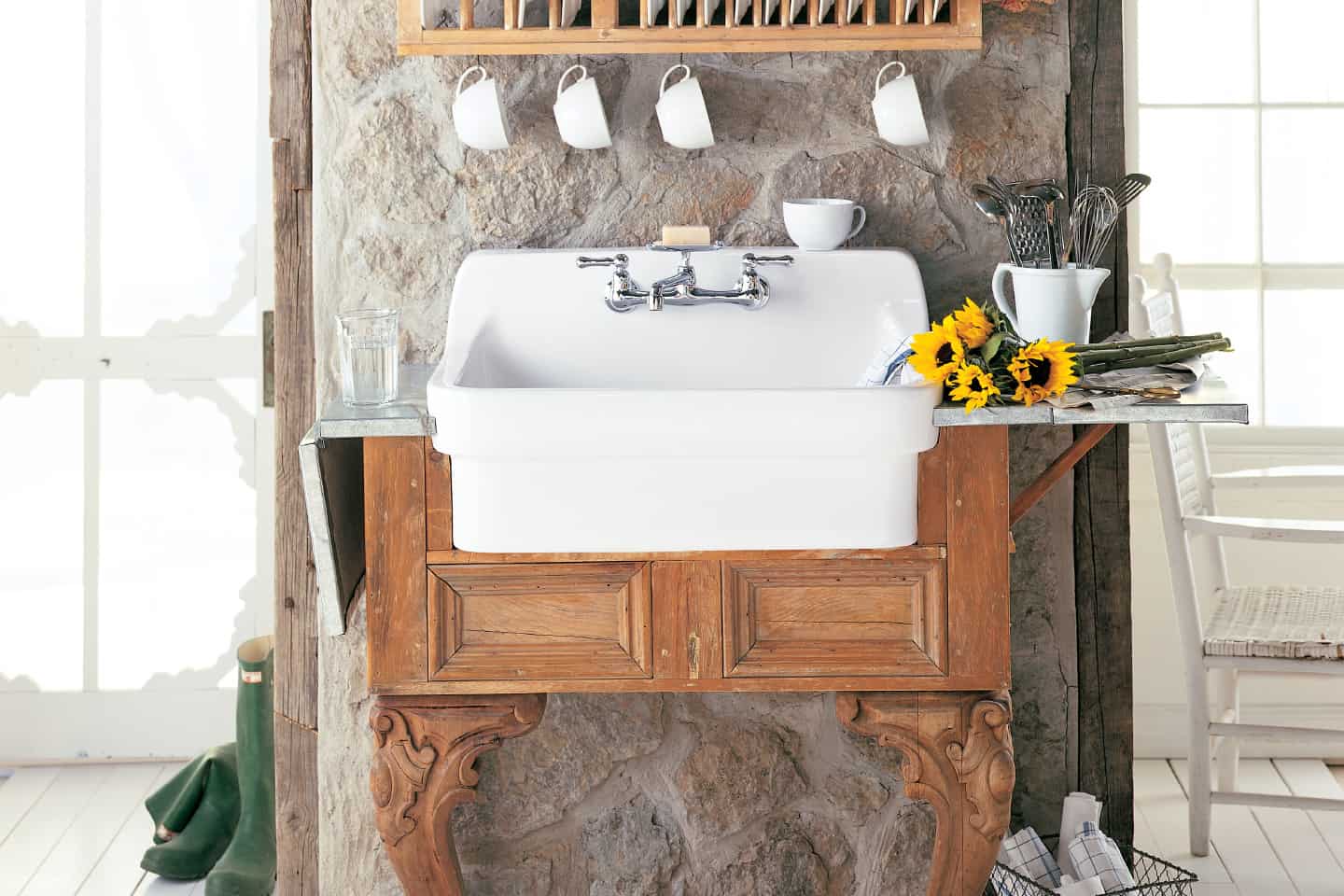
Comfortable, warm, and never quite out of style, modern farmhouse interior design has held its place as one of the most requested looks in home renovation for good reason. It takes the honesty of a working farmhouse wide boards, iron hardware, worn textures, and pairs it with the precision of contemporary building. The result is a farmhouse-style interior that feels lived in on day one, without ever looking dated five years later.


At its core, the modern farmhouse interior design style is about restraint paired with texture. Instead of leaning on decorative trim or busy patterns, this look builds character through material choice: wide plank white oak floors, matte plaster walls, and iron or brass hardware that’s allowed to patina naturally over time.
Smooth plaster in a warm off-white tone replaces heavily textured drywall, and a wire-brushed matte oak floor grounds the room without making it feel cold. That combination is what separates a true country farmhouse interior design from a farmhouse-themed room. It’s less about décor and more about how the materials themselves are chosen to age well.

A rustic modern farmhouse looks right when things don’t match. Reclaimed beams over a smooth stone counter, or rough plaster next to a clean steel window, stop the room from feeling too rustic or too sterile. Three pairings do this well: stone with metal (quartz or soapstone counters, unlacquered brass or matte black fixtures that age over time), old wood with clean walls (beams or exposed joists against plaster or drywall), and black iron with glass (thin mullions, pulls, and door hardware).
A mid-century modern farmhouse works the same way. Low, simple furniture and earthy colors like terracotta and olive sit comfortably in a farmhouse palette.
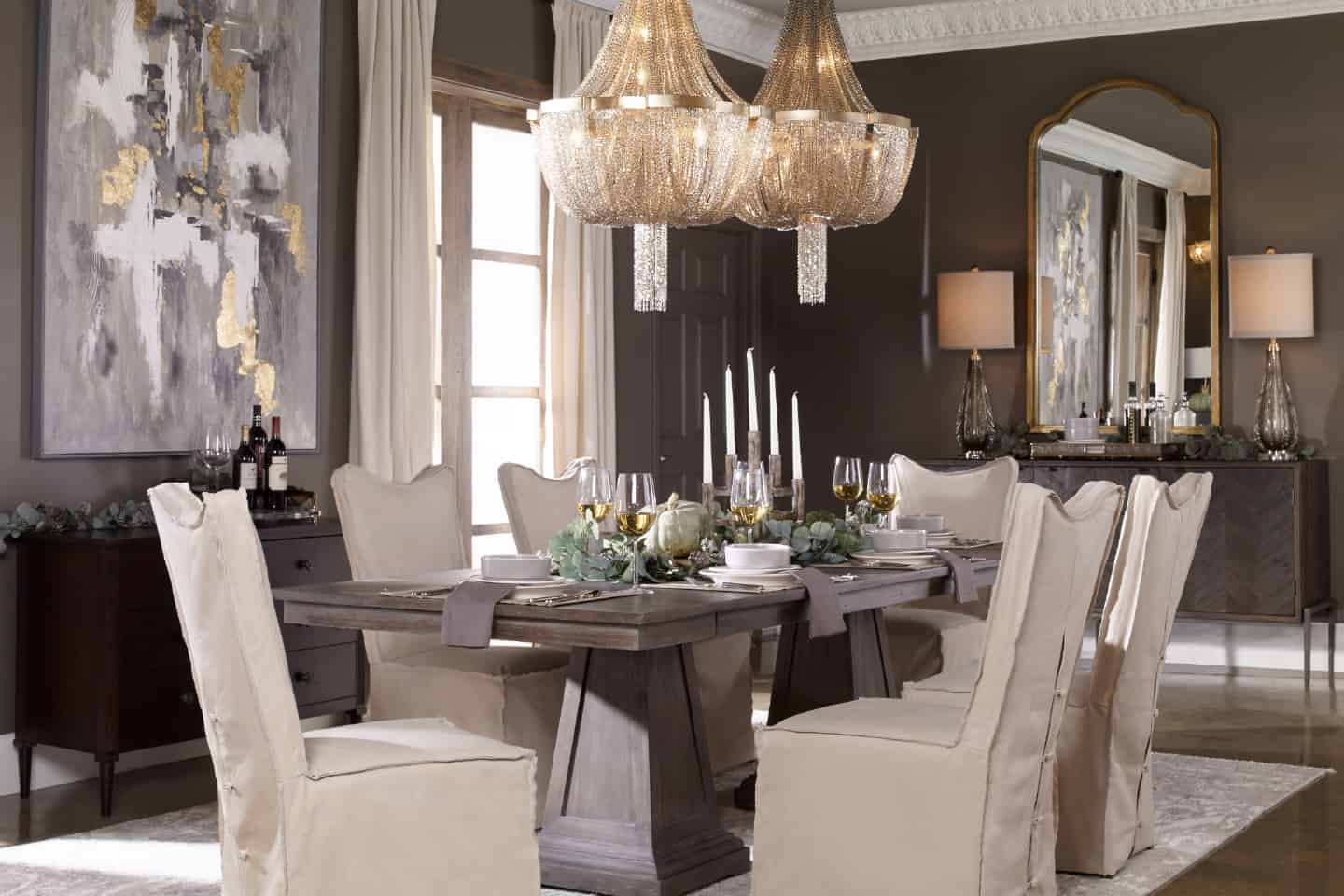
A perfect marriage of traditional and contemporary design, the transitional style takes on a bold, sophisticated look while maintaining a classic feel.
ExploreRich with history and forever in style, the traditional look celebrates the best in design — making your home feel warm, inviting and friendly.
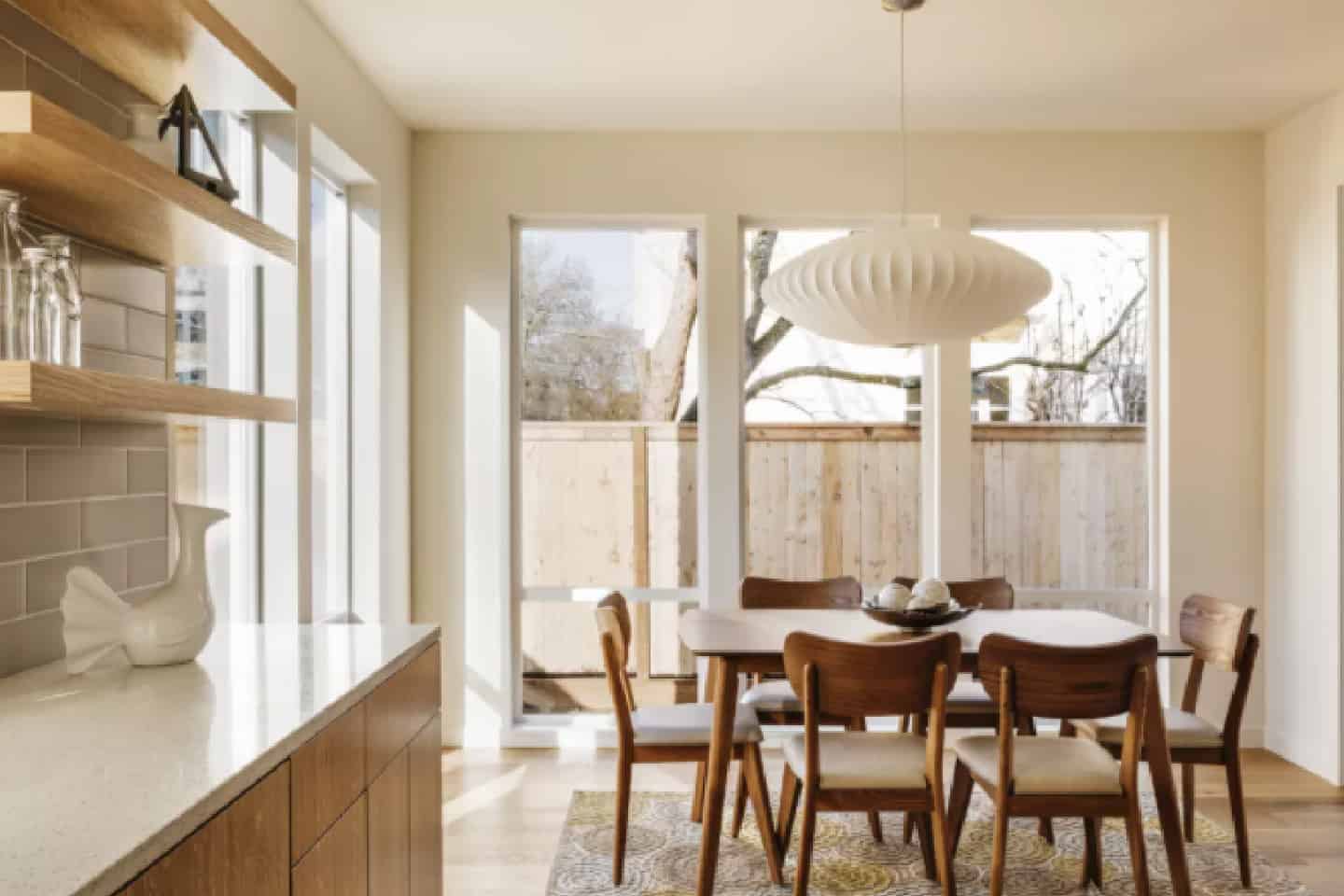
Explore60’s chic meets modern minimalism with this retro style. Learn more about mid-century modern design & how to incorporate it into your home.
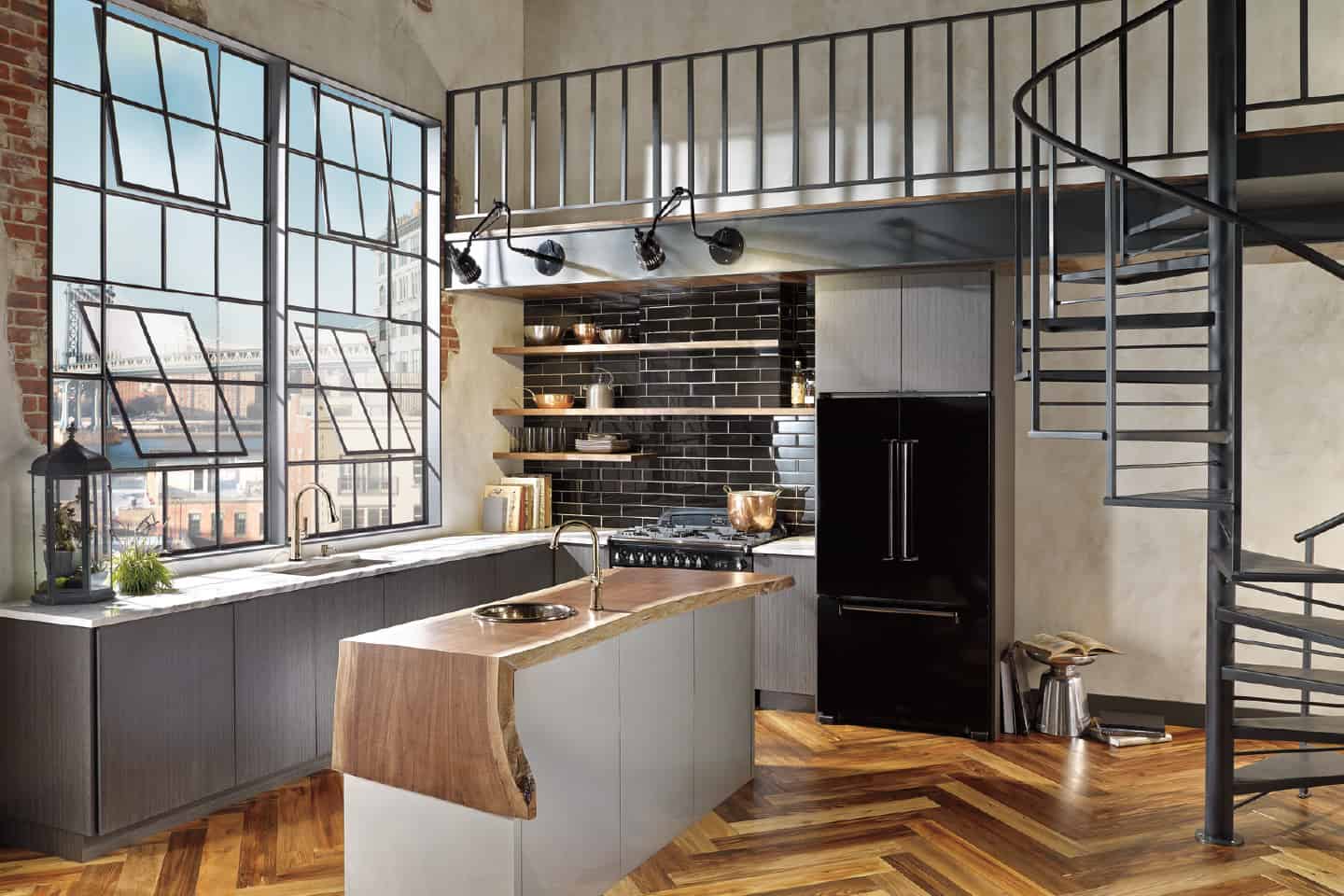
ExploreIndustrial design brings vintage to the modern day, with wood, concrete, exposed bricks & metal as the defining characteristics of this minimalist style.
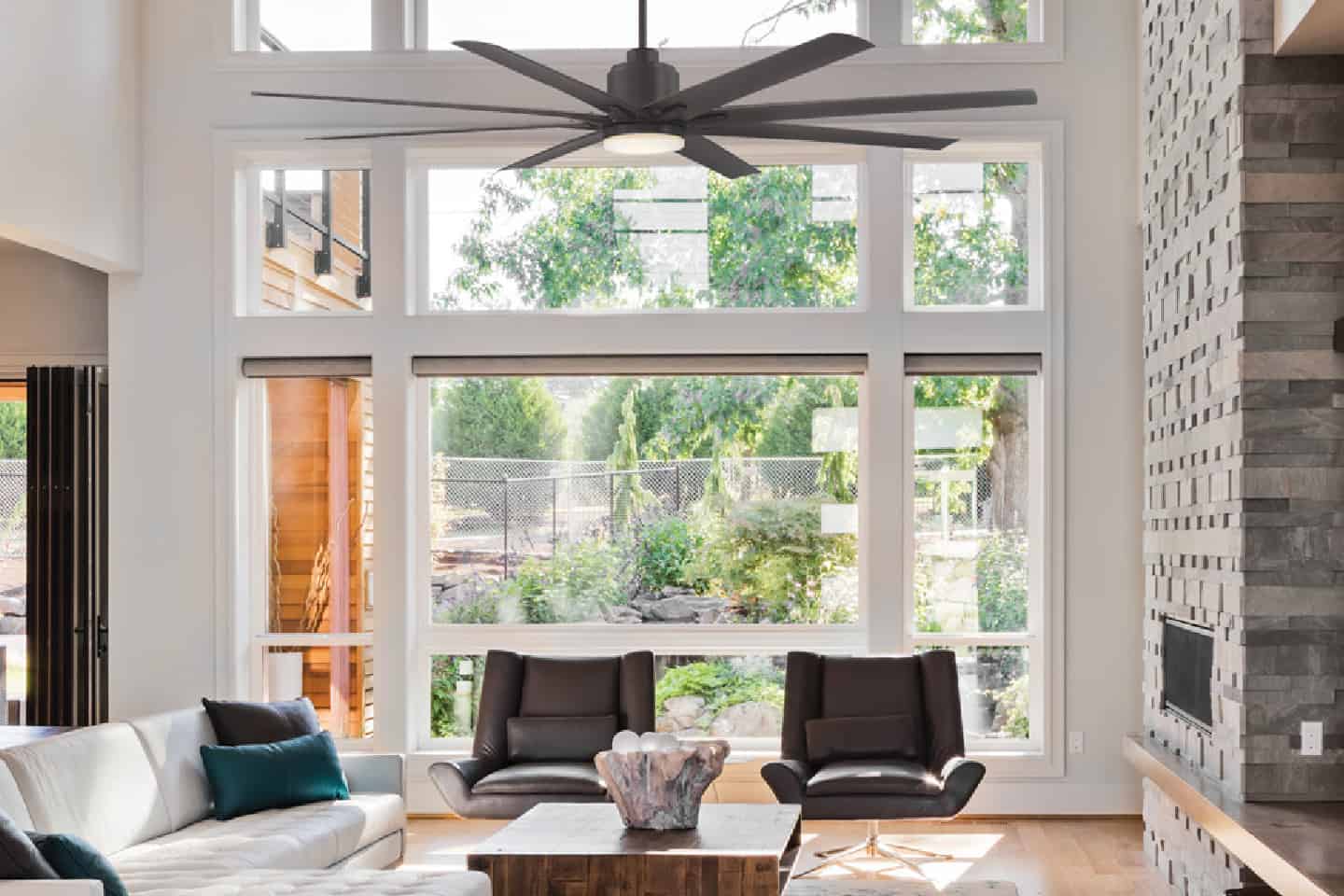
ExploreBorrowing elements from modern, traditional and art deco movements, the contemporary look is versatile and always in style.
ExploreVisit a Showroom
A strong modern farmhouse interior design comes down to material choices you’ll still be happy with in ten years, not just this season’s finish. Our design consultants can walk you through fixtures, counters, and cabinetry in person so you can see and touch everything before you commit.
Schedule a Design Consultation. Explore Modern Farmhouse Products
Layer Into Fall
This fall, it’s all about the layers. Explore a curated mix of finishes, textures and details designed to help you create spaces that feel collected, comfortable and completely your own.
VIEW THE LOOKBOOK
Wide plank floors and plaster walls set the backdrop, but the pieces you touch every day decide whether a room reads as farmhouse or simply as white. In a modern farmhouse kitchen, that means the sink, the faucet above it, and the lights overhead. In the bath, it means the vanity and the fixtures around it. Each should look sturdy, a little traditional, and practical enough for daily work.
A farmhouse sink, also called an apron front sink, has an exposed front panel that sits forward of the cabinets instead of hiding behind them. Most run 30 to 36 inches wide, which leaves room for large pans. Material sets the character:
Bowl depth matters as much as material. A deep basin hides dishes and fits large stockpots, which is the original reason farmhouses used them.
A bridge faucet connects its hot and cold handles with a horizontal pipe, with the spout rising from the center. It’s the most recognizable farmhouse kitchen faucet because it echoes early exposed plumbing. Most deck-mounted bridge faucets need multiple holes in the counter, so confirm the count before the countertop is cut. Wall-mounted bridge faucets suit apron front sinks well, since the spout reaches the deep bowl without crowding the back edge. If you prefer a single handle, a gooseneck pull-down with a lever and a traditional spout shape fits the style too. Delta offers kitchen faucets in both formats, and the spout reach should land near the center of the bowl.
A garbage disposal for a farmhouse sink works the same as any other, but some fireclay sinks have a thicker base than standard sinks, which can call for an extended mounting flange. Check the sink specification before ordering. InSinkErator makes food waste disposers as well as instant hot water taps, which deliver near-boiling water for tea or blanching from a small faucet beside the main one. Choose that tap in the same finish as the bridge faucet so the sink area reads as one set.
Modern farmhouse lighting draws on barns, porches, and old schoolhouses. Over an island, farmhouse pendant lights with metal barn shades or lantern frames give direct light where food is prepared. Seeded glass, with its small trapped bubbles, softens the look. Over a dining table, a farmhouse chandelier in an iron candle style, a wood-bead design, or a simple lantern frame becomes the room’s focal point. Size the chandelier to the table rather than the room, and keep its metal consistent with the kitchen pendants. Put the pendants and the chandelier on separate dimmers so each can be set for its task. Progress Lighting carries farmhouse light fixtures in each of these forms.
The modern farmhouse bathroom starts with the vanity. A farmhouse bathroom vanity usually looks like furniture: turned or square legs, a painted or stained wood base, and simple drawer fronts. A white undermount or vessel basin keeps it clean. For the farmhouse bathroom faucet, a widespread model with cross or lever handles fits the period feel. Farmhouse vanity lights with gooseneck arms, small barn shades, or seeded glass sconces flank the mirror without glare. A freestanding tub with a matching tub filler completes the room, and DXV’s bath collections include faucets, sinks, freestanding tubs, and toilets that share one design language.
The laundry room is where the style’s working roots show most clearly. A deep utility sink, in fireclay or stainless steel, handles soaking and hand-washing, and a high-arc or wall-mounted faucet leaves room to fill a bucket. Closed cabinets hide detergents, while a single row of hooks or a hanging rod keeps the room useful. A flush-mount barn light or a small lantern overhead carries the lighting theme in from the kitchen.
Bring your cabinet plans, since an apron-front sink and a wall-mounted faucet both affect how the sink base and back wall are built. If you’re keeping an existing countertop, note how many faucet holes it has and their spacing. Take the Style Finder quiz, find your nearest location, and book an appointment so a design consultant can show you sinks, faucets, and lighting side by side.
Yes. Warm wood and stone pair naturally with low-profile mid-century modern furniture, and earthy tones like terracotta and olive sit comfortably in a farmhouse palette.
Choose a few solid, high-quality accents, like raw stoneware, brass trays, or hand-carved wood bowls, instead of filling shelves with mass-produced decor.
Yes, but execution is key. Swap wide, horizontal boards for narrow vertical paneling to give the room a fresh, intentional look.
At Coburn’s Showroom locations across Louisiana and Texas, including Abita Springs, Alexandria, Baton Rouge, Bayou Vista, and Beaumont. Book an appointment and a design consultant can pull Delta faucets, DXV bath fixtures, and Progress Lighting options for your project.
Yes. An apron front sink needs a sink base cabinet with a cut-down front and added support for the sink’s weight. Existing cabinets can sometimes be modified, but measure the sink first, since sizes and front heights vary.
A single bowl fits large pans and baking sheets flat. A double bowl lets you soak in one side and rinse in the other, so choose based on how you cook and clean.
Clean it with mild soap or a non-abrasive cleaner, and use a bottom grid to keep pots from leaving metal marks. Fireclay resists chipping, but a heavy cast iron pan dropped hard can still damage it.
Yes. Compact apron front sinks start at about 24 inches wide, so they fit smaller sink bases while keeping the look.
It fills large pots right at the range, which saves carrying heavy water across the kitchen. It needs a cold water line run to the wall behind the range, and Delta makes pot fillers that can match the sink faucet.
Traditional farmhouse leans heavier and more rustic, with distressed finishes and collected antiques. Modern farmhouse keeps the warmth but adds clean lines, lighter walls, and sharper metal accents.
Modern farmhouse keeps visible rustic texture, such as reclaimed wood, barn lighting, and apron sinks. Transitional style is smoother and more tailored, blending traditional and contemporary forms with less raw material.
Warm whites, soft greige, muted sage green, and charcoal accents all fit. Avoid stark, cool whites, which can make wood and plaster look flat.
Give the island its own identity with a contrasting paint color, furniture-style legs, or a butcher block top, while the perimeter cabinets stay lighter.
No. A clawfoot tub suits the style, but a simple freestanding slipper tub or an alcove tub with farmhouse fixtures works just as well.
They suit pantries, laundry rooms, and closets well. For bathrooms, keep in mind that a barn door leaves gaps at the edges, so it gives less privacy and sound control than a hinged door.